Discoveries
Penjor

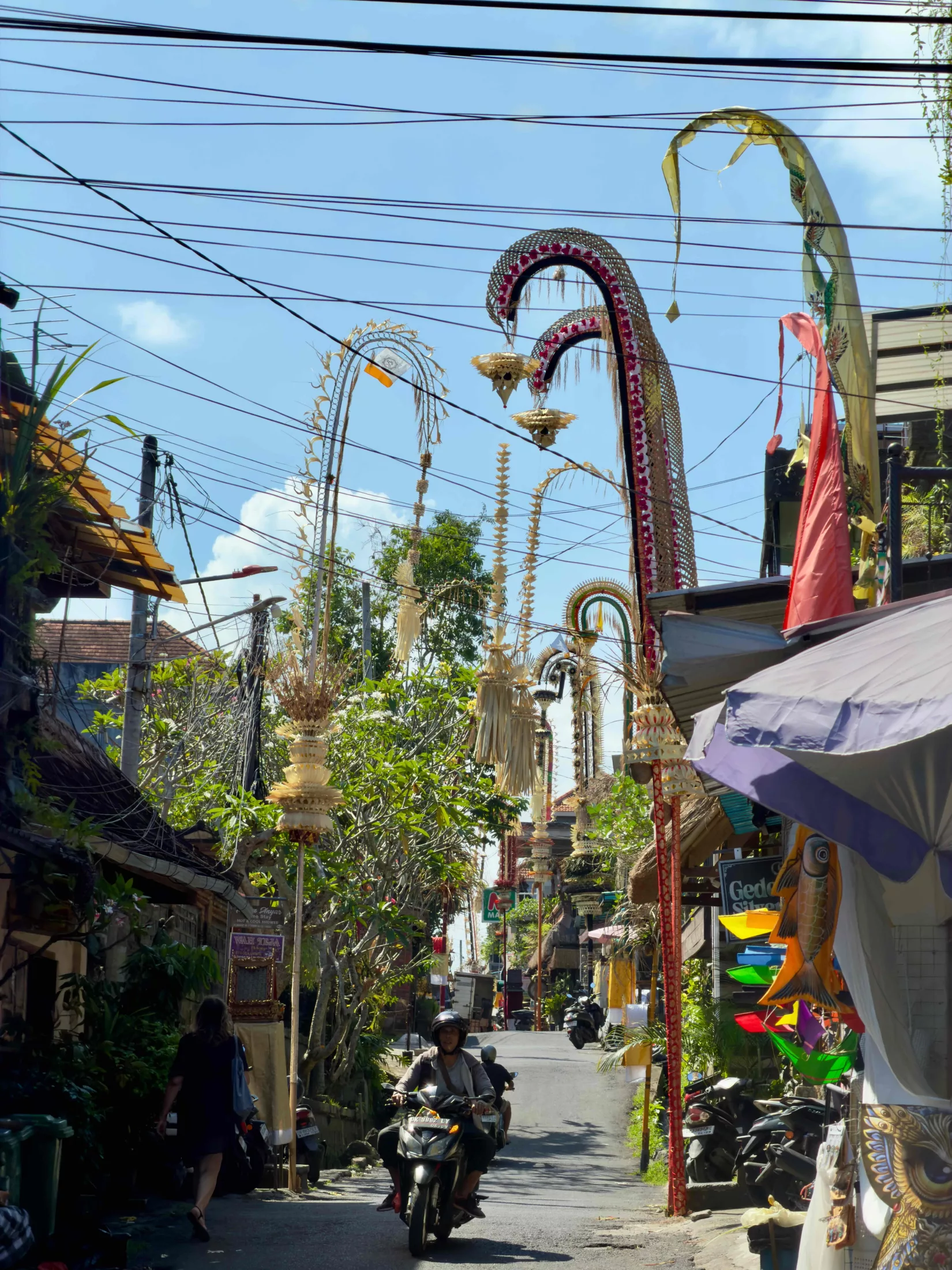
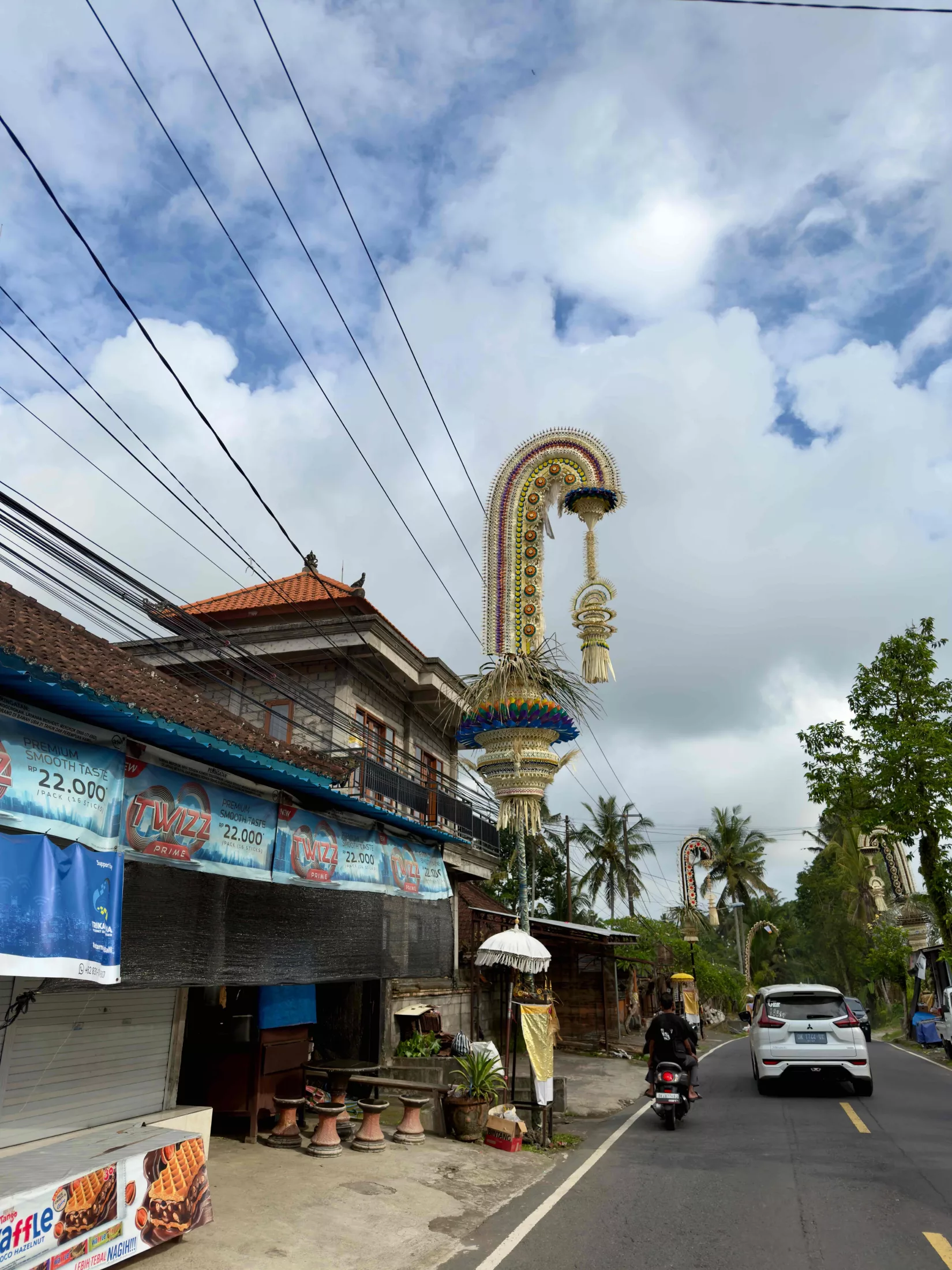
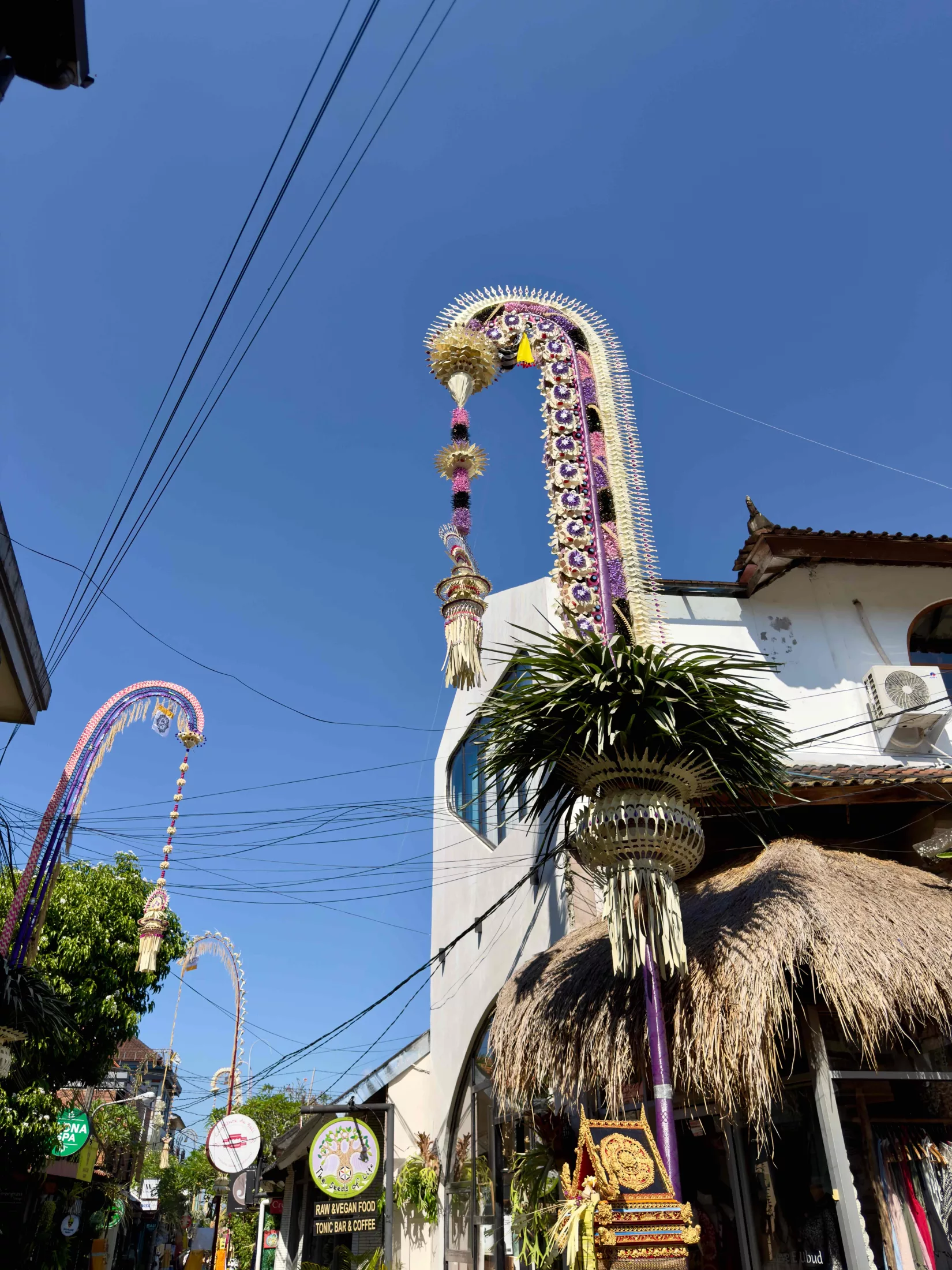
The penjor is one of the most striking images we keep from our time in Bali. We discovered it as part of Galungan, the big Balinese religious festival, and it was literally everywhere. All the streets, all the villages, all the alleys were lined with these immense curved bamboos which stood in front of each house, creating a sort of plant canopy above the roads. An atmosphere that is both solemn and fascinating, totally unique.
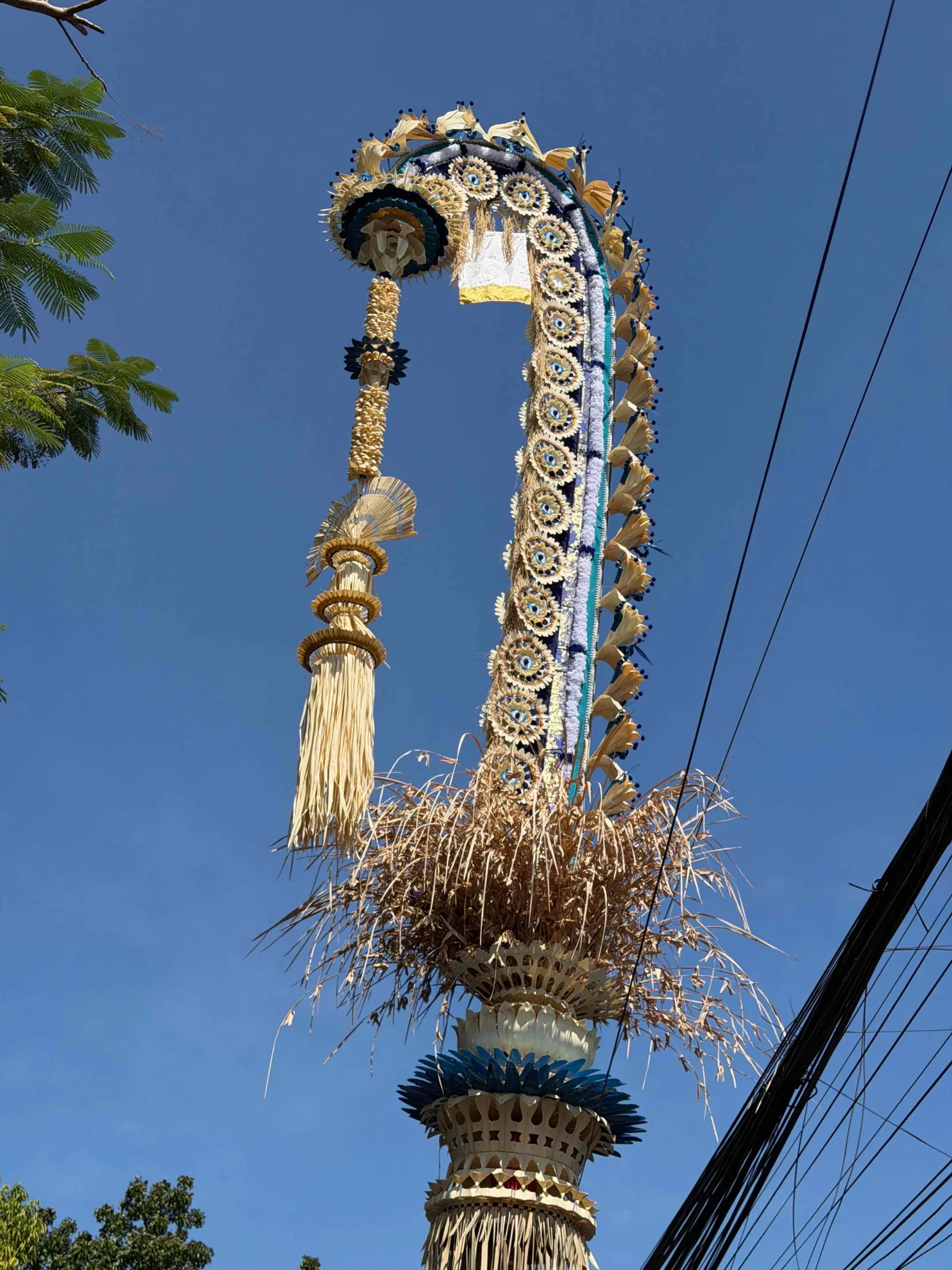
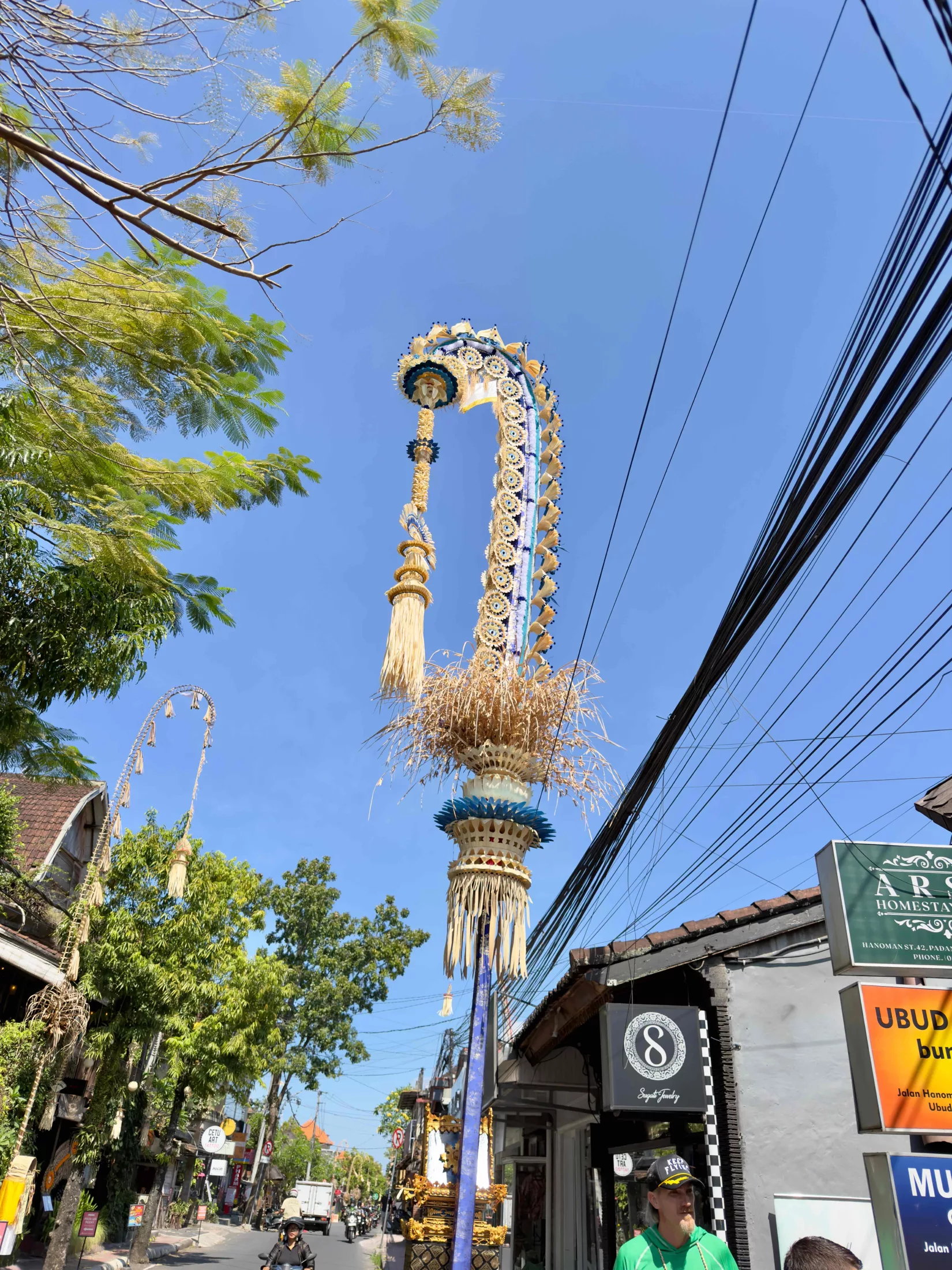
The penjor itself is a long bamboo five to ten meters high, carefully curved at its upper end to form an elegant arch. It is richly decorated with janur, these young yellow coconut leaves woven with incredible precision, but also with stalks of rice, coconuts, fruits, small cakes and sometimes coins or white fabric. At the base, there is often a small altar where daily offerings are placed.
Each element has a specific meaning in Balinese Hinduism. The bamboo symbolizes Mount Agung, the island's sacred volcano, considered the residence of the gods. The curve represents human humility in the face of the divine and the link between earth and sky. Coconut leaves evoke the purity and flow of rivers, rice abundance and harvests, coconut the unity of life. It is, in a way, a spiritual map of the island, rendered in natural materials.
The penjor is installed on the eve of Galungan, on a day called Penampahan Galungan, and remains in place for the entire ten-day cycle that ends with Kuningan. Galungan celebrates the victory of dharma (good) over adharma (evil), and marks the time when the spirits of ancestors return to visit the earth. The penjor then serves both as an offering of gratitude to the gods and as a landmark to guide the ancestors to the family home.
We were very lucky to arrive in Bali right during this time. This was absolutely not planned on our side, but the timing turned out to be ideal. In every restaurant, every small business, every warung where we stopped, we saw people in full preparation: weaving coconut leaves, making offerings, assembling decorations. We even witnessed the assembly of penjors in front of shops several times. And it was especially the Balinese themselves, in the bars and restaurants, who spoke to us at length about it, with obvious pride in their culture. This is what made this discovery particularly valuable.
What touched us beyond the aesthetics was the collective and family aspect of it. Each penjor is unique, handcrafted by the family, with know-how passed down from generation to generation. Walking the Balinese streets at this time is like crossing an entire island praying, giving thanks, celebrating together.